
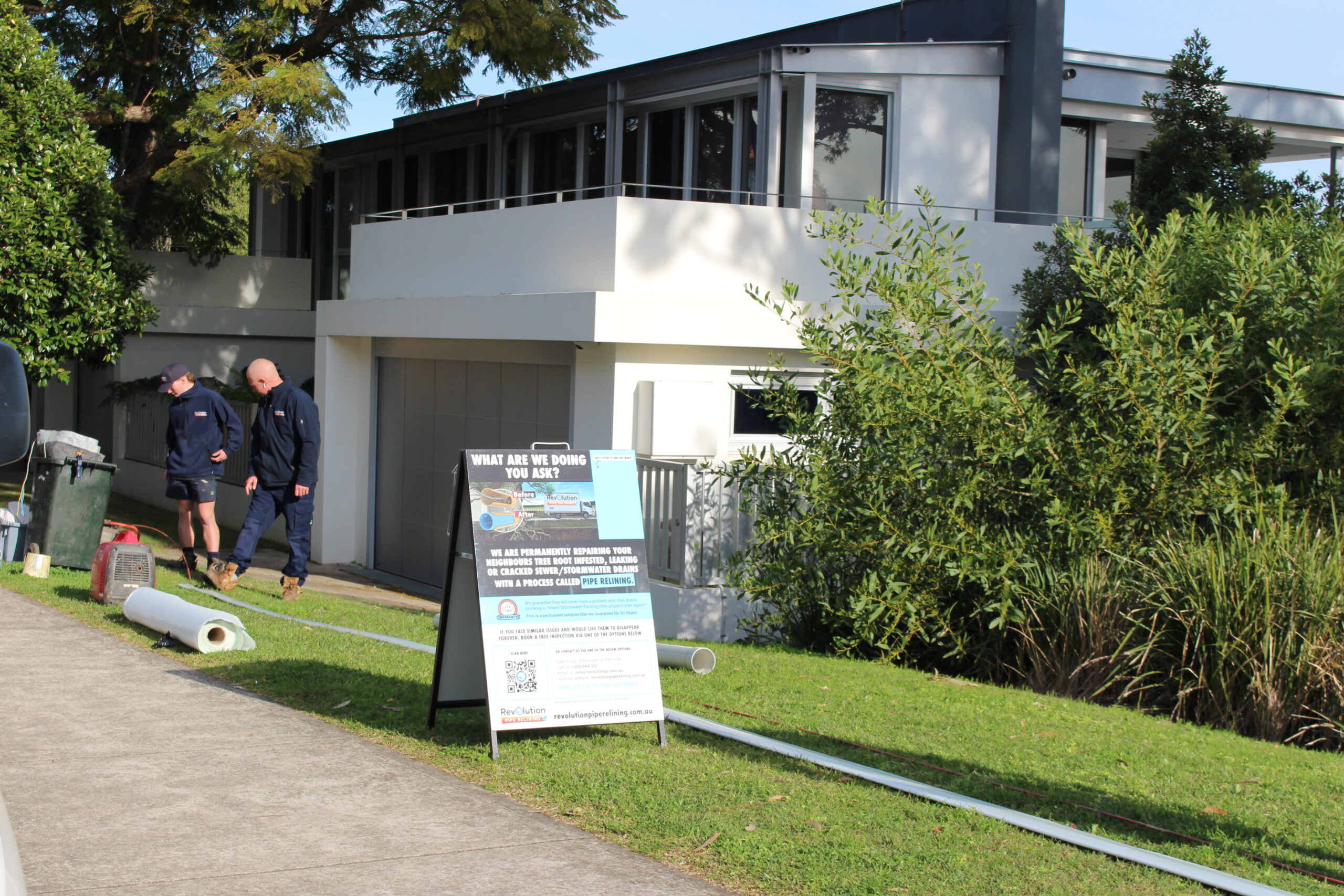
08 Jul Cast Iron Pipe Relining in the Eastern Suburbs: The Hidden Issue Behind Apartment Block and Period Home Plumbing Failures
Drive down almost any street in Bondi, Bondi Junction, Edgecliff, Rose Bay, Coogee or Randwick, and the architectural pattern is unmistakable. Three and four-storey walk-up apartment blocks built in the post-war and 1970s development boom sit side by side with grand period homes in Woollahra, Bellevue Hill, Double Bay and Vaucluse. The visible differences are obvious. The hidden similarity is not. Both property types were built during eras when cast iron was the standard material for soil stacks, waste lines and stormwater connections, and both are now contending with the consequences.
The first signs are usually subtle. A persistent damp patch on a unit ceiling. A recurring sewer smell in a powder room. Rust staining around a ground-floor floor waste. Repeated blockages in a basement laundry. Cast Iron Pipe Relining in Eastern Suburbs properties has become the standard response to these warning signs, replacing the older, more invasive approach of cutting open walls, ceilings and gardens to rip out failing pipework.
Inside the Case for Cast Iron Pipe Relining in the Eastern Suburbs
For owners of strata-titled apartments, the cast iron problem is a vertical one. Soil stacks running floor to floor are buried inside service ducts and bulkheads, often passing through the bathrooms and kitchens of every unit in the block. When graphitisation advances to the point of pinhole leaks or collapses, the consequences move quickly from one unit to several. A single failed stack can affect three or four owners at once and trigger contested insurance claims about who pays for what. This is the scenario that cast iron pipe relining services in Eastern Suburbs apartment buildings have been designed to resolve. The work proceeds from accessible points above and below the stack, occupants remain in place, and the relined section returns to service the same day. Cast iron pipe relining services in Eastern Suburbs strata buildings now form part of the standard maintenance vocabulary used by experienced strata managers across the area.
The picture in period homes is horizontal rather than vertical. Grand homes in Woollahra, Bellevue Hill, Double Bay and Vaucluse typically have cast iron waste lines running out under courtyards, lawns and pool surrounds toward the boundary. Many of these gardens have been substantially developed over the years, with hardscaping, water features, mature trees and pool infrastructure all installed above pipework that was originally laid when the property was much simpler. Where the camera reveals a discrete fault at a single junction or a short corroded section, a cast iron pipe patch is often the most efficient solution. A cast iron pipe patch installs a short structural insert exactly where it is needed without committing to a full reline of the run. Where the damage is more widespread, relining cast iron drain pipe along its full length seals every defect in a single continuous process. The decision between relining cast iron drain pipe in full and applying a targeted patch comes down to what the CCTV footage shows, never to guesswork.
Cast iron pipe relining works because it addresses the root cause of the failure rather than just the symptoms. The technique installs a resin-saturated liner inside the existing pipe and cures it in place to create a new structural wall that is bonded to the host pipe and impervious to further graphitisation. The relined section behaves as a continuous, jointless pipe with a working life measured in decades, not years. Strata committees value this because it converts a recurring maintenance liability into a one-off capital decision. Private homeowners value it because cast iron pipe relining preserves landscaping that took decades to mature.
Cost is the question every owner eventually asks, and pipe relining cost is genuinely variable in the Eastern Suburbs because the work scope varies so widely. A short patch on a single corroded junction sits at one end of the scale. A full vertical stack reline through four occupied floors sits at the other. Pipe relining cost is shaped by line diameter, total length, number of access points, severity of damage and whether the project is vertical, horizontal or both. The figure that matters most to clients is not the standalone reline price, but the comparison against pipe replacement, which carries demolition, reinstatement and occupant disruption costs that often dwarf the reline itself. For most clients across the area, pipeline relining in Eastern Suburbs apartments and period homes is the more economical decision when measured across the realistic life of the building, and pipeline relining in Eastern Suburbs strata projects is increasingly written into long-term maintenance plans rather than treated as a reactive expense.
Get the Right Cast Iron Pipe Relining Specialists for Your Eastern Suburbs Property
Cast iron failure in an Eastern Suburbs apartment block or period home is not a problem that improves with time. The earlier it is properly diagnosed and addressed, the more options remain available and the less invasive the eventual solution will be. Revolution Pipe Relining works across both segments of the Eastern Suburbs market, providing specialist cast iron rehabilitation for strata-managed buildings and detailed solutions for owners of significant private homes. Their licensed team brings high-definition CCTV diagnostics and proven relining and patching methods to every project, with a lifetime guarantee on the relined sections that very few competitors in Sydney are prepared to match.
For Eastern Suburbs homeowners, strata committees and building managers who would like a no-obligation quote on cast iron pipe relining or related drainage work, Revolution Pipe Relining can be reached on 1300 844 353. A single conversation is often all it takes to confirm whether a full reline, a targeted patch or a staged programme is the right next step.
No Comments